
Huelva, June 18, 2026
Acting Regional Minister for Agriculture Ramón Fernández-Pacheco calls for a strong CAP during the institutional closing ceremony, regrets the “neglect” of the Alcolea Dam project, and requests a dedicated budget for fruit and vegetable producers.
Andy Stalman highlights brand value, collaboration, and people as key drivers of the future of the berry sector: “When we build a brand, we stop having customers and start having believers.”
The 11th International Berry Congress concluded today after two intensive days of analysis, debate, and business opportunities, once again turning Huelva into the leading international meeting point for the berry industry. More than 1,700 professionals, companies, researchers, and institutions participated in an edition marked by innovation, sustainability, internationalization, and the search for solutions to the main challenges facing a sector that is strategic to the economy of Huelva and Andalusia.
The closing day combined sessions focused on international markets, health, social responsibility, and brand value creation, further consolidating the Congress as the leading forum for the berry sector in Spain and Europe.
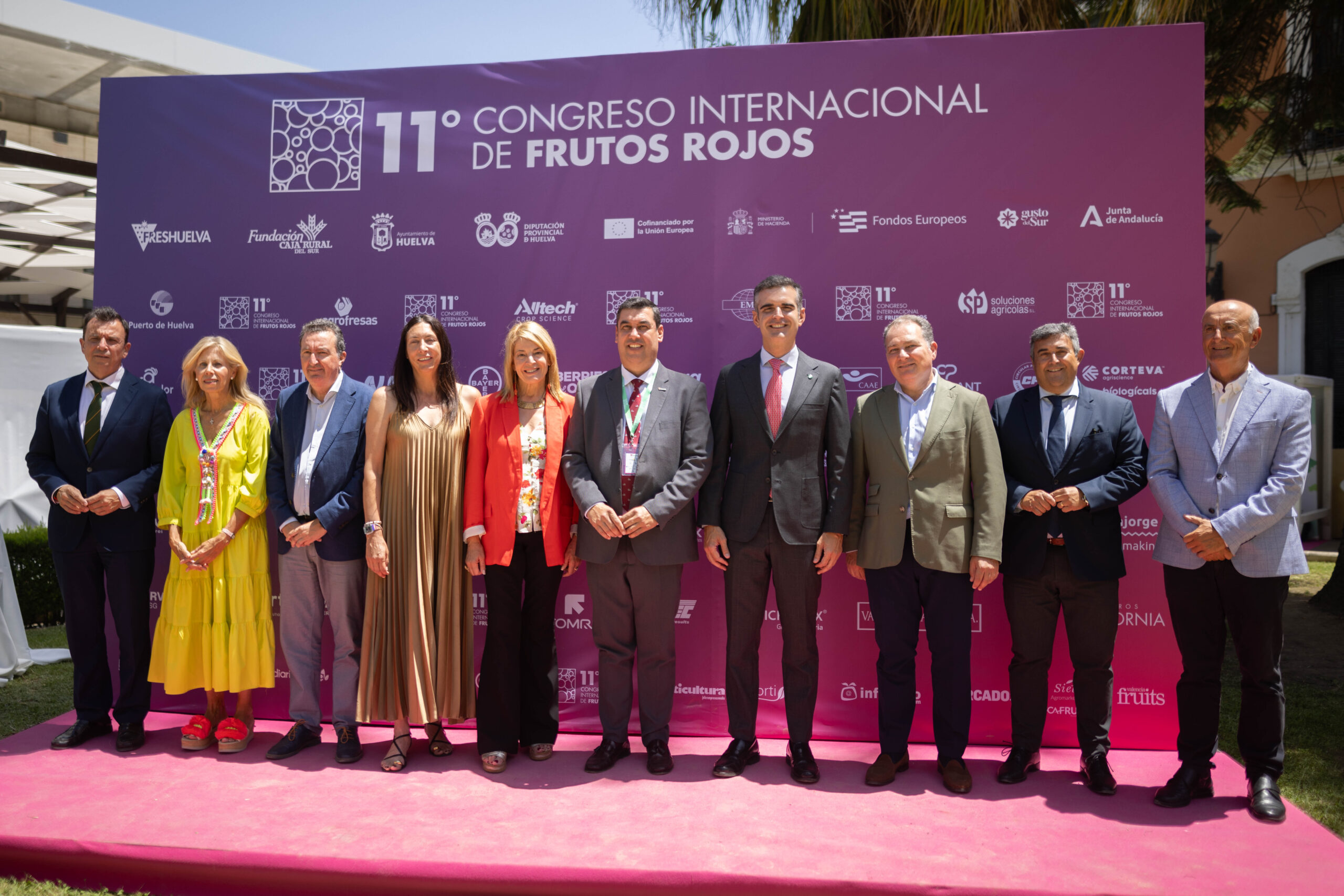
The institutional closing ceremony was chaired by the Acting Minister of Agriculture, Fisheries, Water and Rural Development of the Regional Government of Andalusia, Ramón Fernández-Pacheco, accompanied by the Mayor of Huelva, Pilar Miranda; the President of the Provincial Council of Huelva, David Toscano; the Acting Minister of Social Inclusion, Youth, Families and Equality, Loles López; the Government Subdelegate in Huelva, María José Rico; and the President of Freshuelva, Francisco José Gómez, among other authorities.
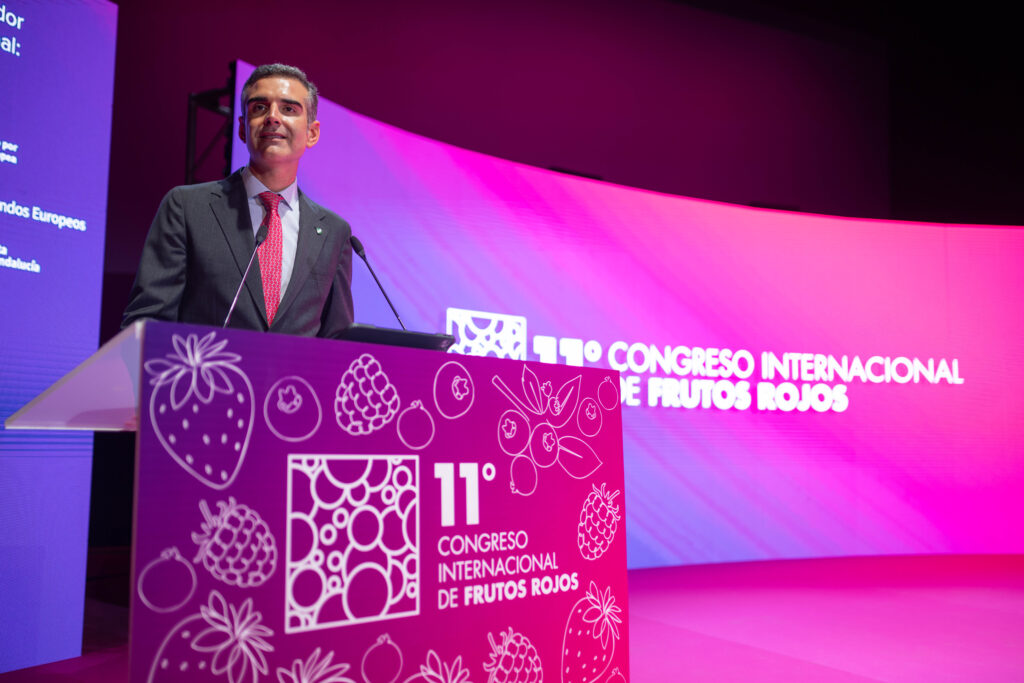
During his speech, Fernández-Pacheco stressed the need for the fruit and vegetable sector to have a dedicated budget within a strong and robust Common Agricultural Policy (CAP), highlighting that it is one of the most dynamic and well-organized agricultural activities in Europe. In this regard, he emphasized the importance of ensuring sufficient resources for Fruit and Vegetable Producer Organizations (F&V POs) to strengthen competitiveness, avoid market imbalances, and guarantee fair competition.
The Acting Minister also highlighted the economic and export significance of Andalusia’s berry sector, noting that it represents 8.8% of the region’s agricultural income and that Andalusia accounts for more than 80% of Spain’s berry exports.
He further pointed out that CAP support and operational program funding have played a decisive role in positioning the sector at the forefront of an agricultural model based on quality, sustainability, innovation, and efficiency. Regarding water resources, he called for progress on pending infrastructure projects such as the Alcolea Dam, regretting that the province has received no updates on a project he considers essential for guaranteeing sufficient water resources for Huelva’s economic and agricultural development.
Andy Stalman: Building Brands to Build the Future
The closing keynote was delivered by internationally renowned branding expert Andy Stalman, who presented the lecture “Sowing the Future, Harvesting Success,” focused on the importance of differentiation and building strong brands in an increasingly competitive market. The conference was sponsored by Gusto del Sur, the quality label of the Regional Government of Andalusia, and co-financed by the Andalusia ERDF Programme 2021–2027.
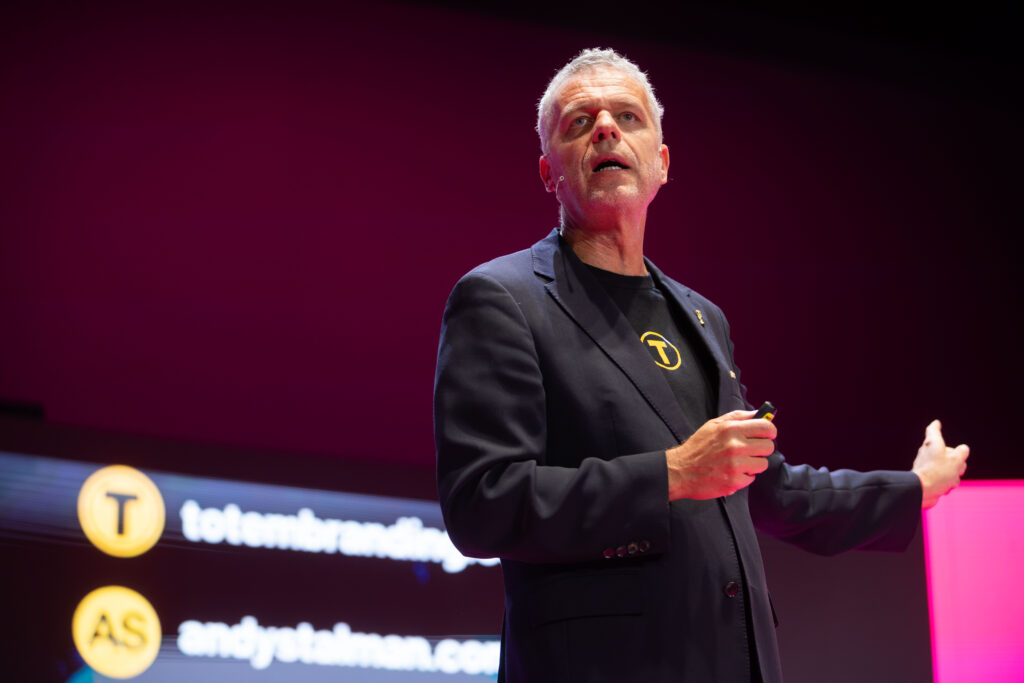
During his presentation, Stalman argued that true differentiation no longer lies solely in product quality, but also in the people behind it and in the ability to create emotional connections with consumers and markets. In this regard, he stated that “a brand is much more than a logo” and that branding has become a fundamental tool for building trust, reputation, and added value.
The international expert also delivered a message of unity to the sector, emphasizing that collaboration strengthens organizations and multiplies their growth potential. “When we build a brand, we stop having customers and start having believers,” he said, encouraging berry companies to capitalize on the enormous potential of a product that already enjoys consumer recognition and trust.
Blueberries: A Driver of Global Growth
The international perspective of the day was provided by Mario Steta, President of the International Blueberry Organization (IBO), who analyzed global blueberry market developments and the growth opportunities available to the berry industry as a whole.
Steta highlighted that more than 80 countries currently produce blueberries and that global production exceeds 2.1 million tonnes annually, with particularly significant growth in markets such as China. He also noted that countries such as Italy and France still have relatively low consumption levels, creating interesting expansion opportunities for European producers.
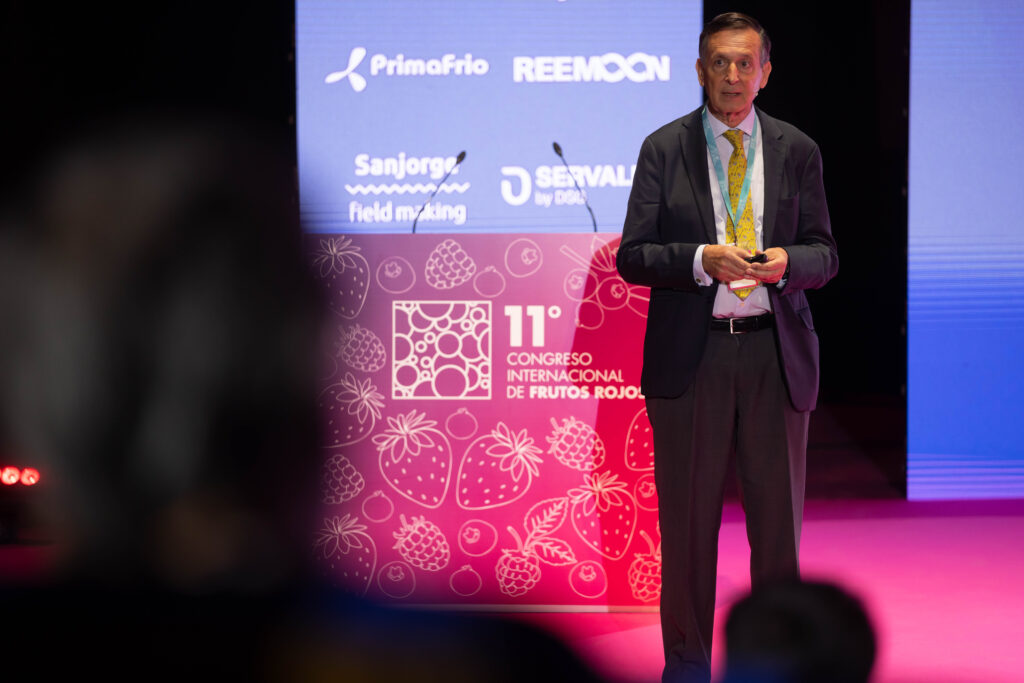
Despite increasing international competition and the challenges facing the sector, the IBO President conveyed a message of cautious optimism, arguing that innovation, collaboration, efficiency, and value creation will continue to be the keys to sustaining blueberry growth in the coming years.
Strawberries Show Benefits in Reducing Menstrual Pain
One of the most innovative sessions of the day was the presentation of the results of a pilot clinical trial promoted by Freshuelva and the University of Huelva on the effects of fresh strawberry consumption among young women experiencing menstrual pain.
Researchers Elia Fernández Martínez and Cynthia del Rocío Márquez Beltrán explained that the study, conducted with 64 participants, found a significant reduction in pain intensity among women who incorporated 250 grams of fresh strawberries into their daily diet for two months. According to the results presented, the average pain score decreased from 7.75 to 6.27 on a ten-point scale.
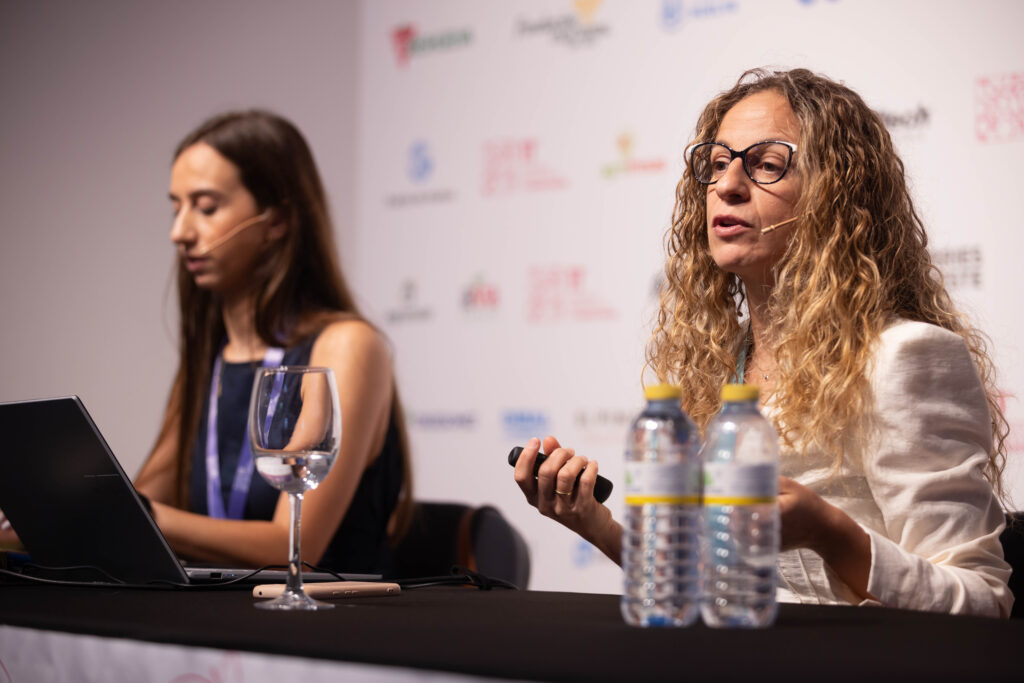
The researchers highlighted the pioneering nature of this study, which is based on the consumption of fresh fruit and supported by the anti-inflammatory and antioxidant properties of strawberries, opening new avenues of research into their benefits for women’s health.
Entrepreneurship for Moroccan Seasonal Workers
Social responsibility also featured prominently in the programme through a roundtable discussion focused on a project supporting entrepreneurship among Moroccan women recruited under Spain’s seasonal employment scheme. Participants included Isabel M.ª Martín Ortiz, Administration Director at Agromartín; Félix J. Sebastián Cabrera, Coordinator of the Lepe and Cartaya centers of Fundación Cepaim in Huelva; and Carmen Díaz Soriano, Provincial Deputy for Social Services, Addiction Prevention and Social Welfare at the Provincial Council of Huelva.
Participants highlighted the value of an initiative that combines collaboration among companies, public administrations, and social organizations to provide training, mentoring, and business advisory services to workers interested in developing entrepreneurial projects in Morocco after completing their seasonal work in Huelva.
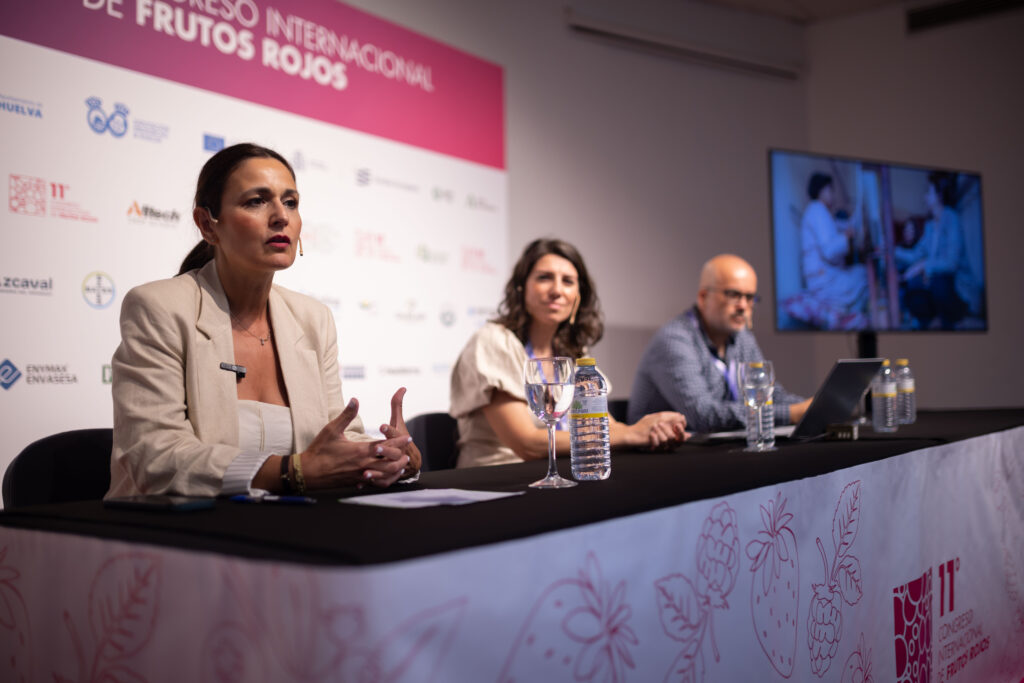
During the discussion, speakers emphasized the programme’s social and economic impact, which has already enabled the launch of various business initiatives in the workers’ communities of origin, contributing to job creation, economic independence, and new development opportunities.
Honduras: When Circular Migration Transforms Communities
The second roundtable analyzed the impact of circular migration on the countries of origin of agricultural workers, using the experience developed with Honduras as a case study.
The session featured Mercedes Gordo Márquez, representative of the social consultancy RepueblARTE, and Miguel Ángel García Arias, Senior Migration Expert at Action Against Hunger Foundation.
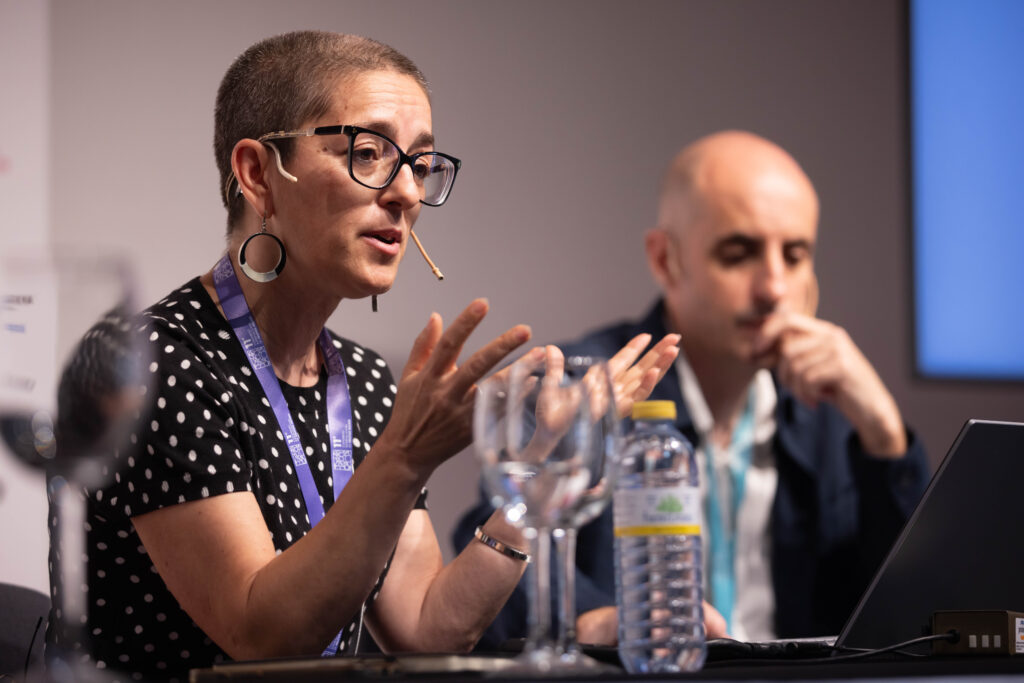
Participants explained how the work and training experience gained in Huelva allows technical knowledge and entrepreneurial skills to be transferred to local communities, encouraging the creation of productive initiatives linked to the agricultural sector.
They also highlighted that the impact generated by the berry sector extends far beyond the borders of Huelva province, becoming an example of international cooperation and shared development between territories.
With this second day, the 11th International Berry Congress concluded an edition marked by high participation, the quality of its content, and its ability to bring together all stakeholders across the berry value chain in a single venue. For two days, Huelva once again became the world capital of berries, reaffirming the leadership, innovative capacity, and international outlook of a sector that is essential to the present and future of the province.